In short.
- Music: AI music tools help compose and record our original hymns — the melodies and the sung recordings.
- Voices: the narration in our episodes and read-alouds, and the singing in our hymns, are made with AI voice tools. No real person’s voice is cloned.
- Art: the pictures and illustrations on our pages are made with an AI image tool. They are not photographs.
- Scripture: quoted word for word — the King James Bible (KJV) in English, the Reina-Valera 1909 in Spanish, the Almeida 1911 in Portuguese — and checked against the printed text.
- People review everything: the CrossAIHub editorial team reads, listens to and looks at every page, recording and picture before it is published.
Our name startles some.
Our household carries a name that startles some Christians when they first hear it: CrossAIHub. The Cross we know — it is the sign under which Christians have lived and died and risen for two thousand years. The Hub we understand — a meeting place, a home for many parts. But the AI in the middle? That gives many Christians pause. We understand the pause. We share it.
A quiet servant.
We treat AI the way one might treat any tool that came into the house from the outside world — with gratitude, with caution, and with clear boundaries. It helps us prepare. It does not preach. It gathers, and we weigh. The kitchen table remains ours; so does the pulpit, wherever there is one.
The choices we make about tools, methods, and processes we keep to ourselves — as any household keeps its recipes. What we publish here is what matters to you: the words, the scripture, the finished work.
We use AI here and there to help with the work — drafting, editing, accessibility. We do not hide that it exists. What matters more than the tool is how we hold it.
What we do not do.
We do not put words in the mouth of Christ. We do not use AI to claim authority that is not ours. We do not generate fake visions or invented sayings of the saints. We do not write history that did not happen. We do not clone any real person, in voice or in likeness.
We do not pass AI-generated text off as the work of a real, named author. We do not deceive about the nature of what we publish. We do not publish theology that has not been weighed against scripture and the witness of the Church through the centuries.
We do not pretend that AI is somehow Christian or somehow neutral. AI is a tool. Tools have makers. The makers have priorities. We use the tool with our eyes open.
Why this is consistent with Christian tradition.
Every generation has had a tool that helped carry the gospel into rooms it would not otherwise have entered. The early Church used the codex. The medieval monks used quill and ink. The Reformers used the printing press. Wesley used circuit riders. Spurgeon printed a sermon every week. The modern Church has used radio, television, podcasts, and now this.
Augustine, in On Christian Doctrine, taught that Christians may use what the world has produced when the gospel is served by it. The Israelites took gold from Egypt and used it to build the furniture of the Tabernacle. The principle is old: take what is good, set down what is not, keep the Cross at the center.
About the pictures.
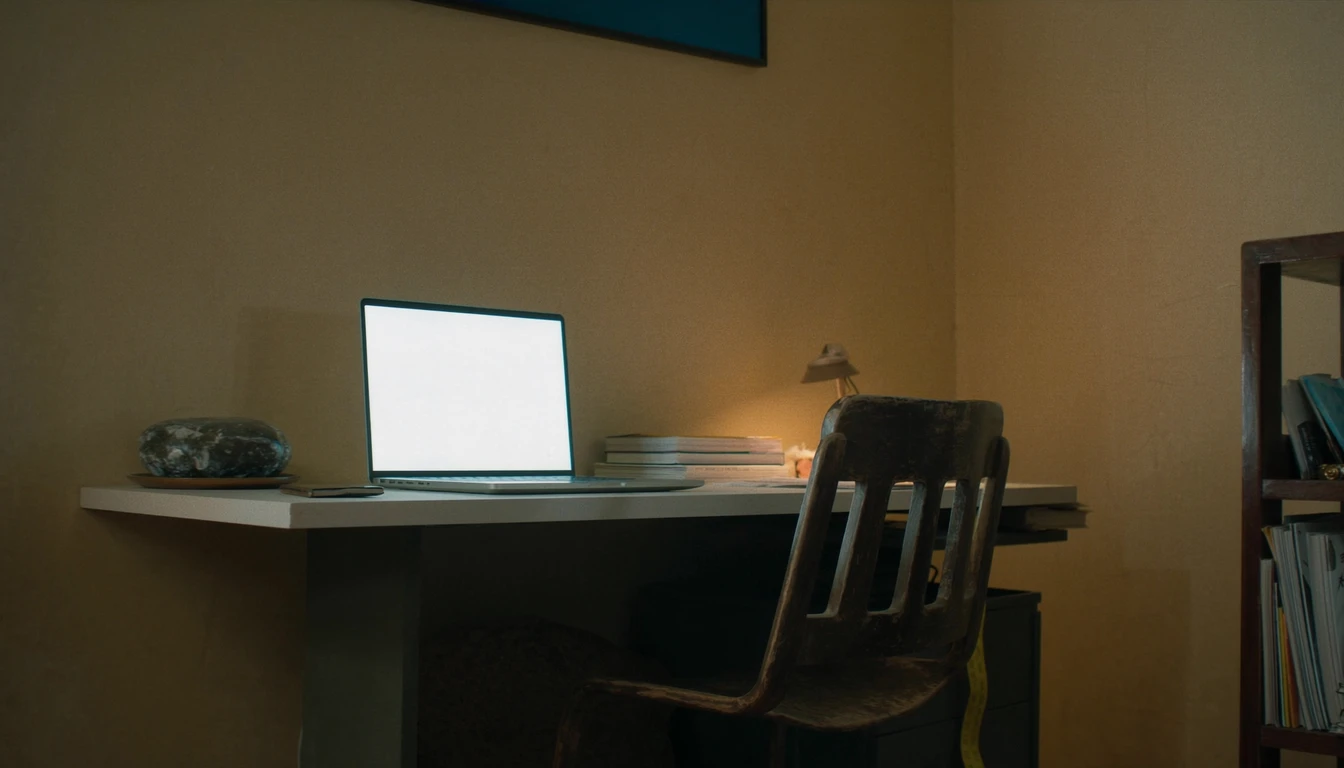
The wide pictures at the top of our pages, and the illustrations through the atlas, are generated with an AI image tool. They are not photographs. Where a page shows Jerusalem, or Ur, or a kitchen table at dusk, you are looking at an image a model produced from a written description, not something a camera recorded.
We say so for the same reason we say it on the album pages: you should know what you are looking at. Every image is seen by a person before it reaches the site, and nothing is published unreviewed. The brief we generate them from forbids readable text inside the frame, and forbids the faces of identifiable people, living or historical — including Christ, the apostles, and the saints.
The words are ours. Scripture is quoted from the King James Bible, word for word, and checked against the text before it goes up.
About the music and the voices.
Our hymns are original. Their words are written with care and checked by a person, and any Scripture in them is quoted word for word from the King James Bible. AI music tools helped compose and record the melodies and the singing you hear on the radio, on the hymn pages and in our videos.
The narration in our episodes and read-alouds is a synthesized voice made with an AI voice tool. It is not a clone of any real person. A person listens to every recording before it is published.
The standard we hold ourselves to.
Ten lines we check our own work against. Every part of this site that touches AI has to pass all ten.
- Faith first — AI serves the mission, it never leads it.
- Family first — every AI feature is built with children and parents in the room, not just an individual “user.”
- AI does not have the final say — every user-facing product, spiritual content, and public claim is reviewed and approved by a person before it ships.
- AI never generates spiritual or pastoral guidance live and unreviewed. It can route people to already-reviewed content; it does not improvise Scripture interpretation or pastoral counsel in the moment.
- We verify before we publish. Every factual and scriptural claim is checked against a real source (KJV text, primary historical sources) before it goes live — including claims about AI itself.
- We tell the truth about what’s free, what costs money, and what’s available right now — no false urgency, no “in stock” when it isn’t, no invented reviews or ratings.
- We protect privacy, especially children’s. We collect the minimum data necessary, we say plainly what we collect, and we never build tools that let AI interact with children unsupervised.
- Give First — content and help come before any ask. Free value isn’t a trick to extract an email; it’s real help, and paid products never get ranked above better free answers.
- We admit what we don’t know. “I’m not sure” is an acceptable answer, both for us and for the AI tools we recommend.
- AI is a tool in service of human relationships — with God, family, and church — never a replacement for them.
How we keep to this.
“Prove all things; hold fast that which is good.”
— 1 Thessalonians 5:21 (KJV)
Verbatim KJV. Where Scripture appears on this site, it appears word for word from the 1611/1769 King James Bible.
A voice that belongs to no one. The synthesized narration in our episodes is deliberately not a clone of any real teacher.
How we address you. Everything written here addresses readers as brothers and sisters in Christ — never as customers, an audience, or followers.
No name at the door. No founder identifiers appear anywhere on the site. The household, not an individual, is the author.
A human reads it first. Every doctrinal claim, every Bible reference, and every theological argument is read by a person before it is published.
We say so when asked. Ask about any piece and we will tell you whether AI helped make it.
Corrections log.
When we find a mistake, we fix it and note it here. If you spot one, write to hello@crossaihub.com.
- 15 November 2026 — Advent, day 19 (Spanish): the verse now quotes only the first sentence of Jonás 2:10 (RV1909), matching the English page; days 14 and 32 no longer carry bracketed translator notes.
- 12 November 2026 — 50 hymn pictures shared on Pinterest pointed to image files that were not online; the files are now published.
- 11 November 2026 — Advent, day 14 (English): 1 Samuel 16:7 now reads “the LORD seeth”, exactly as the King James Bible prints it.
Our promise.
If the tool ever begins to shape the message rather than carry it, we will set it down. The cross is the center. The hub gathers many — including any who have been wary of AI, and who are reading this with cautious eyes. You are welcome here. Read what we offer, weigh it against scripture and tradition, and keep what is good.
We pray for you. We thank the Lord for the patience of those who read carefully and ask good questions of what they read.
May the Lord bless you with discernment and joy in equal measure.
— The household